How One Missing Inventory Update Triggered a Costly Manufacturing Crisis

The Story Continues at Exacuer
During one of our knowledge-sharing sessions at Exacuer Global Services, a team member asked me an interesting question:
“Sir, we understand ERP and ERPNext, but what real business problems does it actually solve?”
It was a fair question. Rather than answering with a presentation or a list of software features, I decided to share a story. A story that many manufacturers can relate to. A story that ultimately cost a company ₹12 lakh.
The Growing Success of Apex Components
Imagine a mid-sized manufacturing company called Apex Components. The company was growing rapidly. Customer orders were increasing, production lines were running at full capacity, and management was optimistic about the future. On the surface, everything appeared to be running smoothly.
However, hidden behind this growth was a problem nobody noticed- inventory visibility.
“We Have Enough Material”
Every day, the Purchase Manager would ask a simple question:
“Do we have enough raw material for production?”
The answer was always the same.
“Yes.”
The stores team maintained one spreadsheet, the production team maintained another, purchasing had its own records, and accounts worked with separate reports. While every department had data, nobody had a complete picture of the inventory situation.
As the business expanded, manual updates became more frequent, and small discrepancies started creeping into the system unnoticed.
The Order That Changed Everything
One day, Apex Components received its largest customer order of the year. It was a significant opportunity, and production began immediately.
For the first two days, everything went according to plan.
Then, on the third day, production came to a halt.
A critical raw material had run out.
According to the inventory records, more than 4,000 kilograms should have been available. However, when the warehouse team conducted a physical stock check, they discovered that only 900 kilograms remained.
Months of missed updates, delayed entries, and disconnected spreadsheets had finally caught up with the business.
The ₹12 Lakh Impact
What seemed like a simple inventory discrepancy quickly turned into a major business problem.
Production stopped. Emergency material purchases had to be made at higher prices. Logistics costs increased. Overtime expenses rose. Customer deliveries were delayed, putting valuable relationships at risk.
When management calculated the overall impact, the result was shocking.
Total Business Impact: ₹12,00,000
The loss wasn’t caused by poor employees or a lack of demand.
It happened because the organization lacked visibility.
Inventory Wasn’t the Real Problem
After hearing the story, one of our consultants asked:
“So, inventory management was the problem?”
My answer was simple.
No.
Inventory was only the symptom.
The real issue was disconnected information. Sales, Stores, Production, and Accounts were all working with different data. When departments operate without a single source of truth, decisions become assumptions.
And assumptions become expensive.
The Turning Point: ERPNext
Determined to prevent similar issues in the future, Apex Components implemented ERPNext.
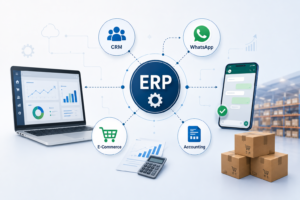
Inventory transactions became real-time. Material consumption was automatically tracked. Purchase teams could identify shortages before they disrupted production. Management gained live visibility into inventory levels and operational performance.
For the first time, every department was working from the same information.
One Business.
One System.
One Source of Truth.
The Lesson for Every Manufacturer
Many manufacturers believe they have inventory problems.
In reality, they often have visibility problems.
As businesses grow, spreadsheets become increasingly difficult to manage, and small errors can quickly turn into costly disruptions. A connected ERP system provides real-time visibility, improves decision-making, and helps businesses prevent problems before they occur.
The ₹12 lakh loss was not caused by inventory.
It was caused by the absence of visibility.
And that is exactly what ERPNext is designed to solve.
To Be Continued…
As the discussion ended, another question came from the team.
“What happens when inventory is available, but production planning goes wrong?”
I smiled.
Because that story was even more interesting.
And significantly more expensive.
Next Episode:
The Production Plan That Looked Perfect… Until It Didn’t.
Stay tuned. Read more